Share
TAYLORSVILLE, Utah — The emotion in Kyle Boardman’s voice is unmistakable as he describes what it was like to build the newly completed Primary Children’s Hospital Taylorsville Campus, knowing the difference it will make in the lives of young patients and their families.
“Something about this project that means a lot to me is that we’re serving one of the most vulnerable populations in the state,” said Boardman, a Jacobsen Construction superintendent who has lived and breathed the project’s vision since he arrived onsite shortly after the work began in November 2023.
“Here in Utah, we have quite a big crisis (with an adolescent suicide rate) more than double the national average. So, being able to play a small part in building a facility that’s just dedicated to helping that population … it has a pretty big impact.”
The new Primary Children’s Hospital Taylorsville Campus, which was built as part of Intermountain Health’s strategic plan to establish the premier pediatric health care system in the United States, opened with a ribbon cutting celebration on Aug. 22. Jacobsen joined caregivers, patients and community leaders for the special occasion.
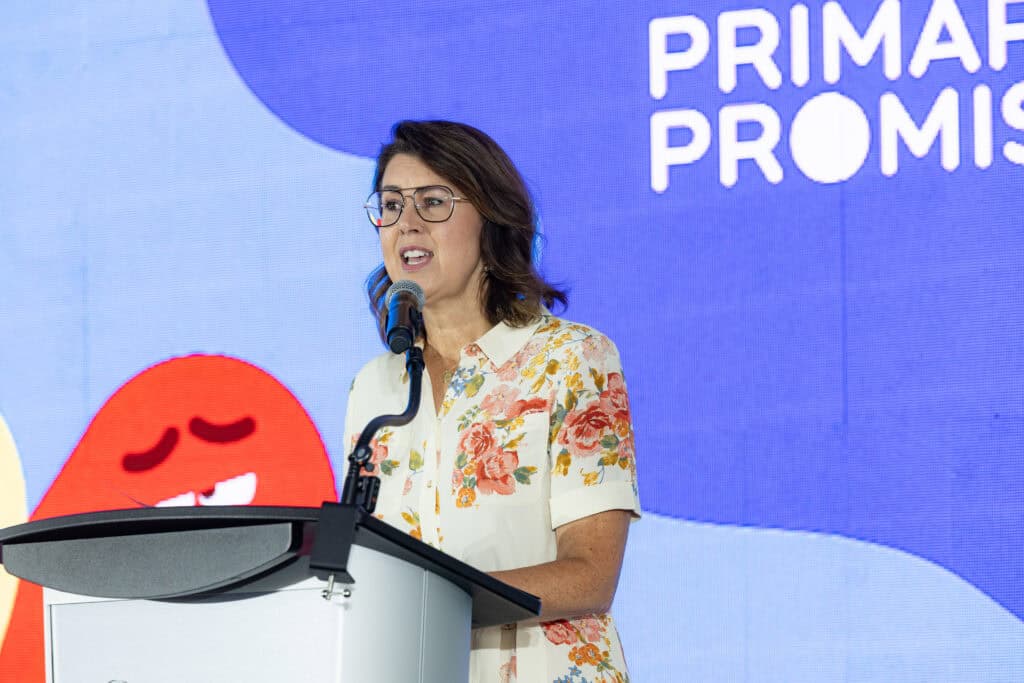
“This is our shared legacy: Caring for children. This is who we are,” Utah Lt. Governor Deidre Henderson told attendees at the celebration of the new campus, which was made possible in part by a state appropriation of $25 million. “This facility is evidence of that.”
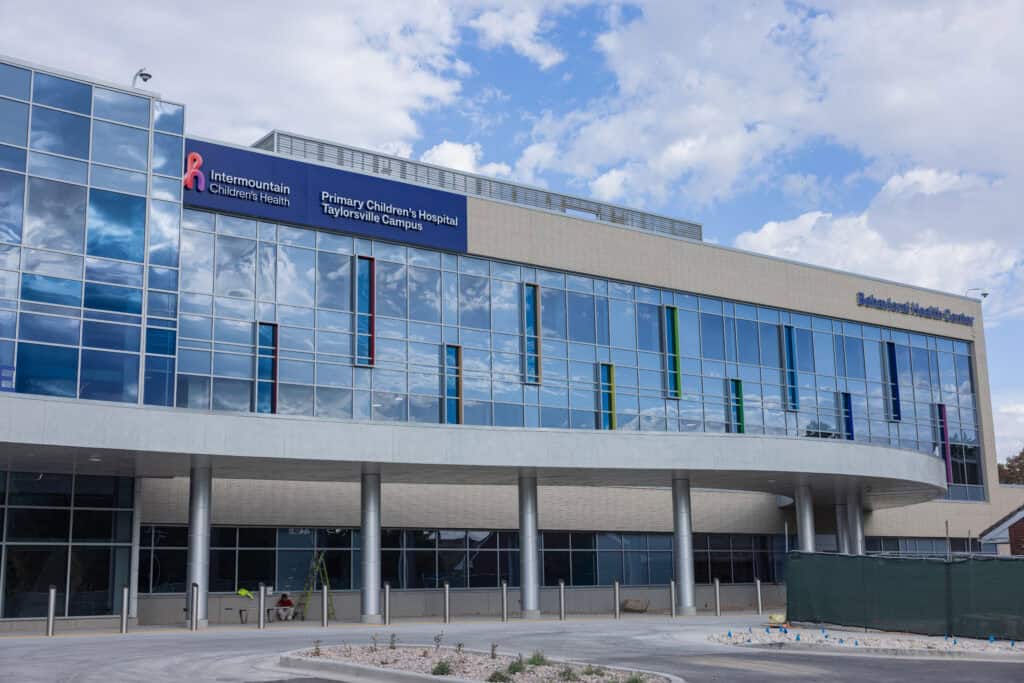
The 120,000 square-foot, three-story hospital is dedicated entirely to behavioral health and will include a comprehensive continuum of care. This includes a crisis assessment center, a 36-bed inpatient psychiatric care area, intensive outpatient therapy spaces, partial hospitalization programs, an outpatient counseling center, schooling support areas and more. The hospital welcomed its first patients on Sept. 6.
“No family is immune to mental health challenges, and the kids in our communities need help and support,” said Amanda Choudhary, president of Primary Children’s Hospital Taylorsville Campus. “We will see every type of family here, and we’re prepared to support any family with whatever mental health crisis or obstacle their child needs to work through.”

The new hospital replaces the old Wasatch Canyons behavioral health campus on the property. The existing campus was dispersed across seven buildings that were less efficient for giving comprehensive care, said Scott Sabin, the Jacobsen Construction project manager who led all work on the jobsite. The new facility makes everything much more easily accessible under one roof, he said.
“The team synergy that they’re going to have for patient care is going to be so much better for these kids, who won’t need to go from building to building to building for each individual thing,” Sabin said.
Primary Children’s Hospital Taylorsville Campus will serve as a vital community resource that meets the behavioral health needs of young patients much better than a typical hospital setting could, Sabin added.
“For kids who perhaps have a mental health disorder — or who are suicidal, or wanting to hurt themselves, or don’t know how to cope with a tragedy, or who don’t know how to handle their anger or anxiety — this is the best place to come to during a crisis, rather than an emergency department,” he said.
“A while back, mental health was something that you just didn’t talk about. This is a place where it’s ok to talk about it, where kids can work through anything they’re going through. This facility can do that, we have the right resources here. The people here care about these kids and their well-being and want them to be able to go home as safe, happy and healthy people.”
In Utah and across the United States, several statistical indicators point to an uptick in mental health crises among children and adolescents, said Kali Wall, operations director for the Primary Children’s Hospital Taylorsville Campus.
“There has always been a need for (behavioral health interventions),” Wall said, “but we do see that the need is even greater now, and we’re grateful to be able to offer that help to our community.”
Creating a healing environment
Choudhary’s 20-plus years as a behavioral health care professional have taught her that there is nothing more heart-wrenching for a parent than being apart from their child who is in crisis.
It’s an ordeal, she says, that has traditionally been all too common for people who are seeking care for a son or daughter.
“There would be nowhere to sit or stand, and many of the older buildings were locked at the front door,” she said. “It was hard to know if it was even ok to come in, as a parent. They would drop their child off and sit in their cars. I had one parent who told me she would drive to the Wal-Mart parking lot down the street and just cry in her car until it was time to pick her child up.”
Now, thanks to a total transformation of pediatric behavioral health that is underway in Utah with the recent completion of the Primary Children’s Hospital Taylorsville Campus, Choudhary says family-centered care will be prioritized as a way to better support young patients.
“Now in the same building, we have spaces for parents to be here close to their child,” she said. “Parents can know that they’ll be welcome here 24/7 and that they’re an important part of the treatment plan and can be close to their child while they’re dealing with something really scary.”
Several aspects of the hospital’s configuration make it more hospitable to supportive parents, including inpatient rooms with an extra bed for a full-time guest, a large Ronald McDonald’s lounge space for families built in a living room style, a full-service cafe and even a meditation room that is available to visitors and staff alike.

“For parents who want to come here and spend time with their kid, or who may need to get a break while their kid is going to therapy, this will be nice for them,” Sabin said.
Meeting rooms at the hospital will also host seminars that are open to anyone in the community who is interested in learning more about how to overcome behavioral health challenges or help a loved one do the same.
“We worked closely with Taylorsville city and intentionally built our main spaces to bring more community functions here,” Wall said. “Because mental health impacts us all.”
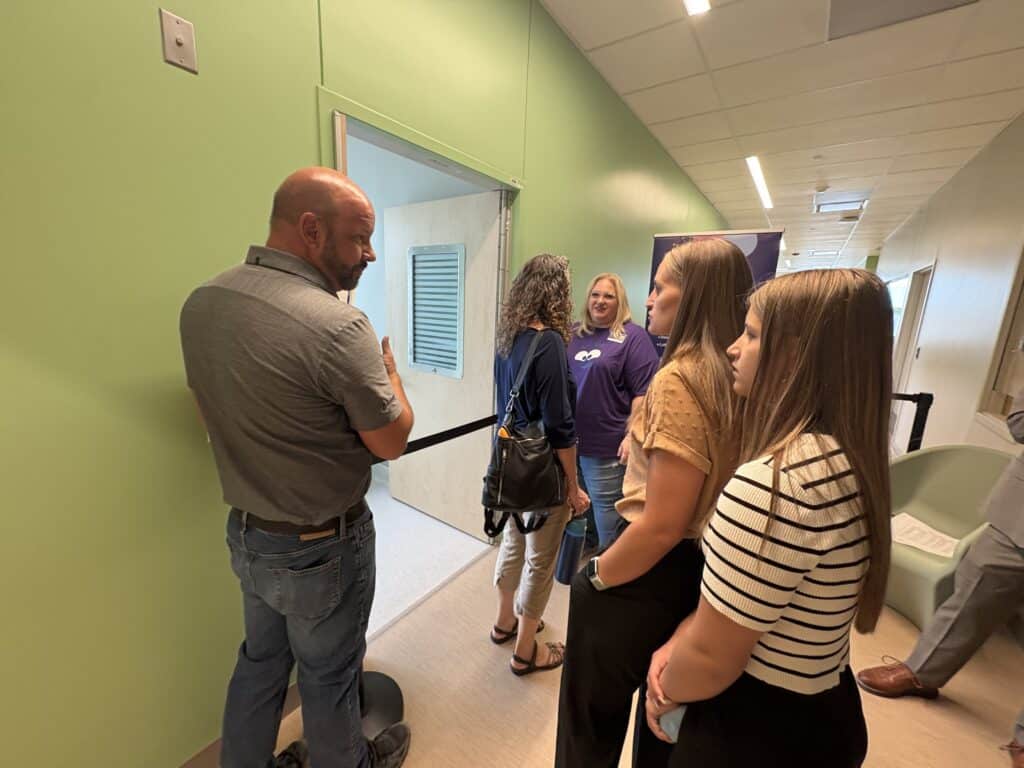
The hospital, designed by nationally renowned architecture firm HDR, also prominently includes several inviting features that were lacking in most behavioral health facilities in previous decades. These include large patient room windows that add an abundance of natural light, the use of warm colors and playful wall art throughout the halls, large open common areas with high ceilings, and more.
“Compared to the industrial feel of the existing brick-and-mortar buildings … the healing atmosphere that patients are going to get here is a big upgrade,” Sabin said.
Intermountain Health sought input from past and current behavioral health patients and their families, Wall said, when deciding on design features that would create the best possible hospital environment for young people.
“Where you are and what you’re surrounded with impacts the way that you feel,” Wall said. “You can just see (behavioral health patients’) excitement for this new environment, and that they’re really passionate about what it looks like. And just from having those conversations you can already tell … that it’s a huge improvement.”
Choudhary said the hospital’s health care providers themselves are similarly thrilled to be working in a facility that emphasizes the physical environment’s contribution to healing and wellness.
“People who have spent their entire careers working in behavioral health, which has (historically) been an underfunded service, are not used to working in brand new buildings with lots of natural light and big open spaces designed for kids,” Choudhary said. “(I loved) to see the reaction of seasoned behavioral health professionals when they walk into this building — and the excitement that they have to provide excellent care in a beautiful setting.”
She added that the impressive new hospital sends a clear message to the community about how important it is to Intermountain Health to give young patients the best possible behavioral health care.
“I want people to know what that help is here now. We heard you. We heard the kids, the teenagers and their parents in our communities over the past several years,” Choudhary said. “They do need more mental health services. And for a while now, we’ve been saying help is on the way. Now, help is here. We want people to come and get access to the services they need.”
A shared vision
Even from the time the site of the new building was “just an empty grass field,” Boardman said, the whole project team was continually made aware of the special meaning the facility would one day hold for children and families in need of help, compassion and expert care.
“One thing we tried to do is emphasize that it’s not just about showing up to work,” Boardman said. “We tried to instill a sense of ownership. We talked about it with all our subcontractors and our foremen, and they communicated with their crews to bring that extra bit of ownership to the project — because what they do really makes a difference.”

That added sense of ownership shined through as the project team worked to solve complex challenges associated with building a behavioral health campus, according to Choudhary.
“I see the difference it makes when there is truly a partnership around the values and the importance of the project, between the hospital team and the construction team,” she said. “And it’s something magical. It really does bring a building to life in a way that’s hard to describe.”
Sabin, who has led numerous complex Primary Children’s Hospital projects for more than a decade, believes the strength of the ongoing partnership between Intermountain Health and Jacobsen can be attributed to mutual trust, respect and commitment to caregivers’ mantra of The Child First And Always.
“They’re our friends,” he said of Intermountain. “We trust them and they trust us. We try to make sure that we have a relationship with them (such) that they know they can count on us to … get them to the goal they want: giving kids the best care.”
For this project, the most crucial collaborations between jobsite crews, facilities management teams and medical providers were centered around how to prevent disruptions to care for patients on the existing Wasatch Campus, which remained operational during construction.
Boardman said these efforts included several workarounds to ensure utility shutoffs didn’t affect patient wellbeing, clearly marking and fencing off active work areas, and even keeping the campus clear of minor construction debris that could be dangerous to a young person struggling with self-harm behaviors.
“It was constant communication daily between Intermountain and our team onsite, making sure that we were thinking ahead and planning,” he said.
Boardman added that materials used for interiors throughout the building were likewise screened heavily for keeping patients from self-harm, leading to innovative choices for several finishes and coverings — all while the project team also made every effort to ensure that these unique elements didn’t distract from the building’s warm and welcoming aesthetic.
Wall said she appreciated the project team’s attention to detail in alignment with Intermountain’s vision for the building’s look — and their ability to accommodate the campus’s unique safety and operational needs from day to day.
“They have really understood our patient population,” Wall said. “There are so many nuances in behavioral health, but they have just gone above and beyond to learn all that they can. … They’ve been so bought into the mission here, and they’ve been so passionate about getting the environment built safely and in a way that is conducive to the best possible patient wellbeing.”
Keeping kids safe — both during construction and while visiting/staying in the new hospital following its completion — was the single highest priority on the project from start to finish, according to Choudhary.
“Putting The Child First And Always — I never questioned that they absolutely did,” Choudhary said. “They walked the walk and they talked the talk. … It’s a lot of responsibility to keep kids safe. Parents trust us with their children at their most vulnerable times. And it was good to know that we had a partner onsite who understood how important that trust is.”